Coin Catalogue of Cromwell and Commonwealth of England Coinage Issued Between 1649 and 1660.
The Commonwealth of England coinage, sometimes referred to as "breeches money" is hammered coinage with it own very distinctive design, minted in England after a period of civil war which culminated in the beheading of King Charles I in London in 1649. For more information LINK
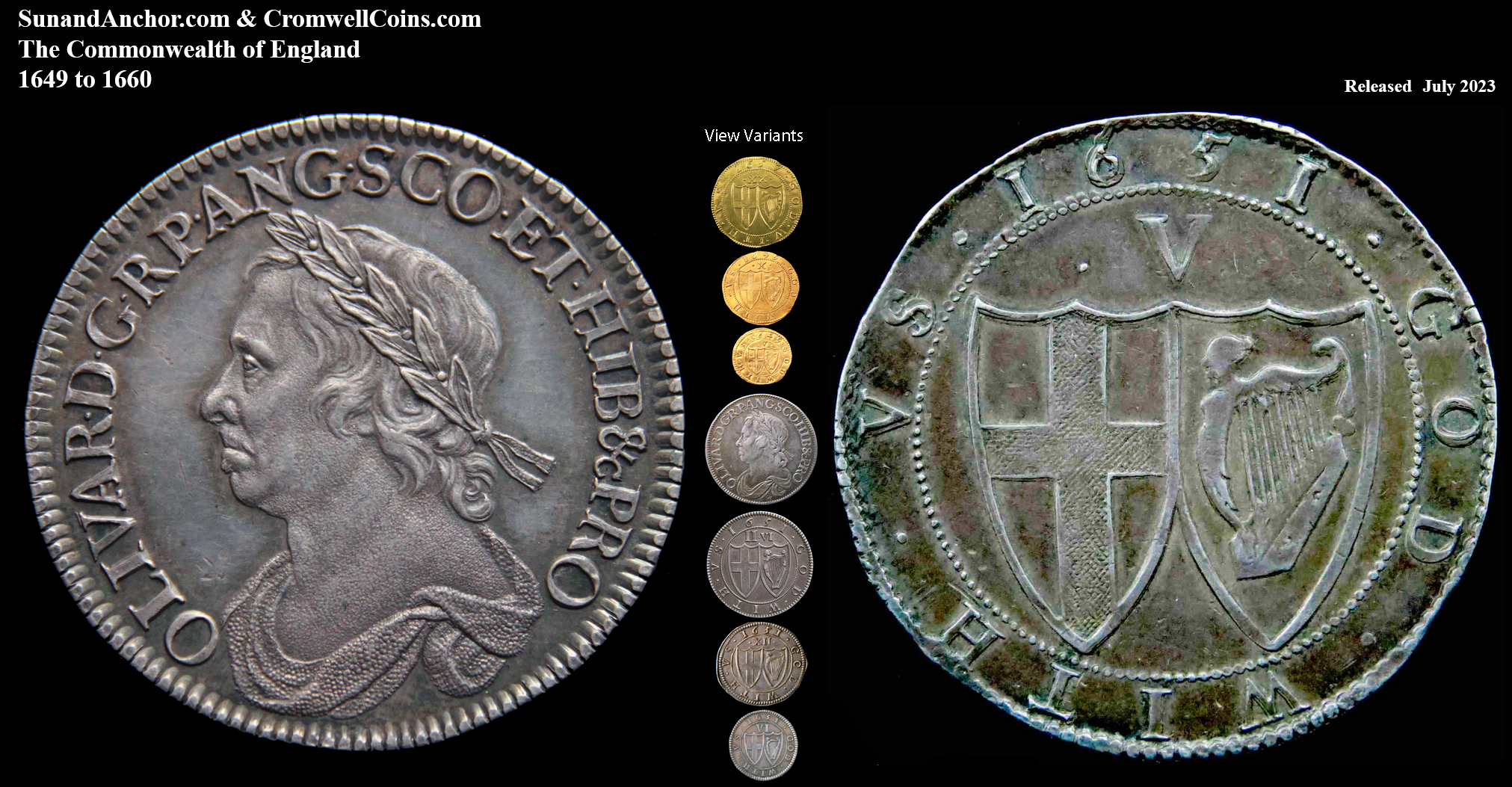
Hammered coins from this period bear no portrait of a king or queen for there was none. Instead there is a simple puritan design. The reverse depicts co-joined shields of England and Ireland, with a date and the legend "GOD WITH VS". The obverse bears the legend "THE COMMONWEALTH OF ENGLAND" and a single shield in the centre with a mintmark above to complete the legend. Gone are the previous latin legends used on Royalist coins of Charles I.
This period was also a time of innovation in minting coins. The traditional hammered technique for making coinage was coming under pressure from masters of forgery who made coins from de-based metals using crude home made dies and surface silvering and others who clipped coins to gain financial advantage - see Rogues Gallery on this website.
The solution was offered by Peter Blondeau - milled coins - with edge writing. He was commissioned to prepare 100 samples of various denominations dated 1651 using his patented press. Although he completed this task, producing coins of extremely high quality, parliament was not inclined to accept his innovation while the mint fought to delay the introduction of his technology and even made some of their own sample coins for comparison.
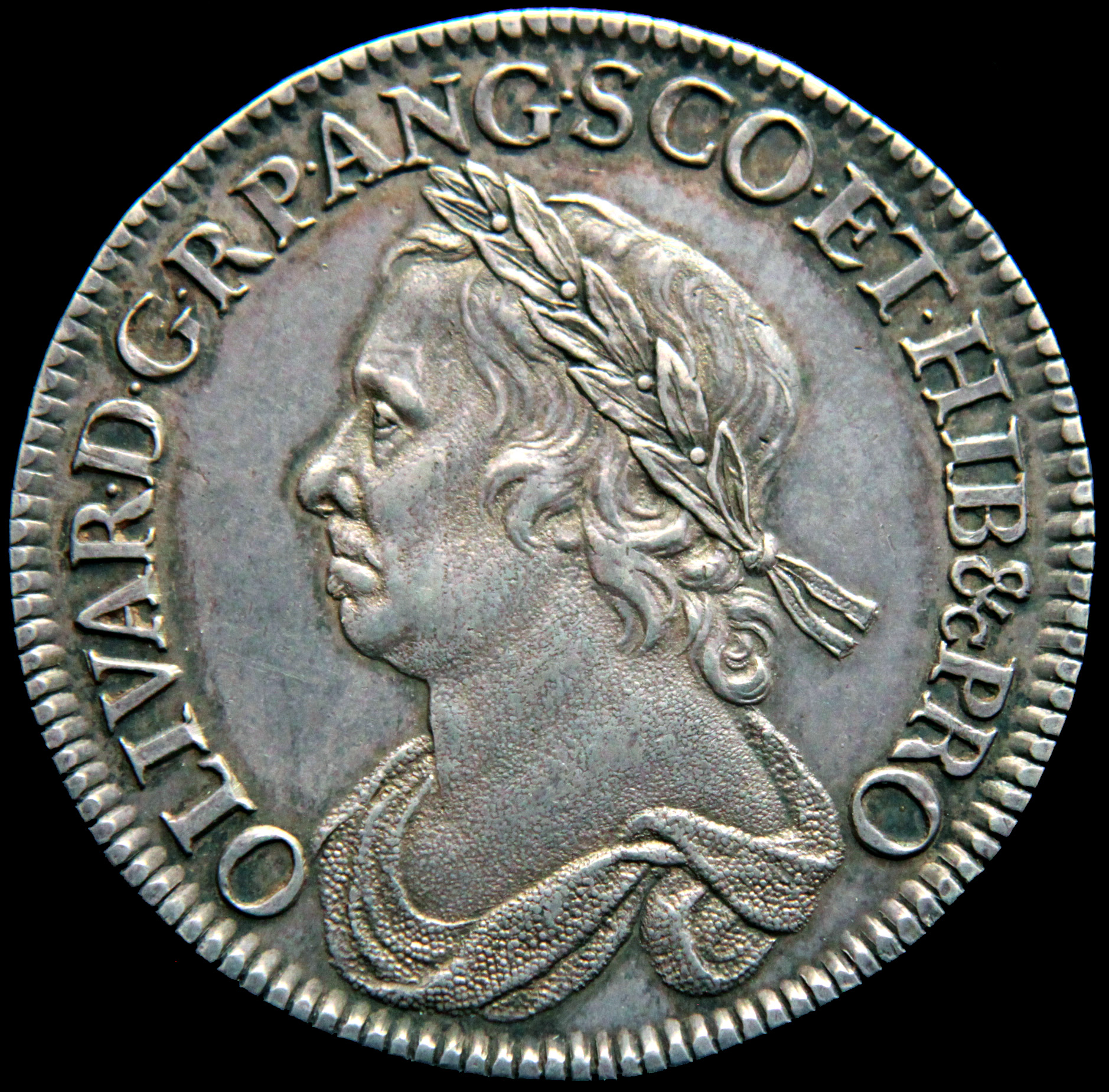
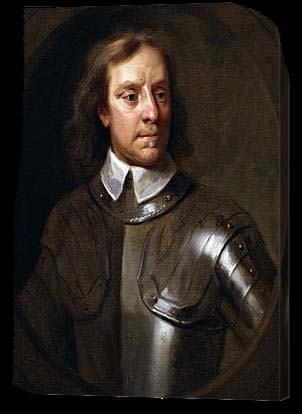
The year 1656 was a year of turmoil at the mint. After repeated attempts, Peter Blondeau persuaded parliament to take up his new press techniques, and he was finally commissioned to make sample milled "Cromwell Coinage" using dies made by Thomas Simon, with gold and silver supplied from the mint. These coins were made in very limited numbers. For the very first time they bore the bust of Oliver Cromwell which was a huge departure from the previously issued “breeches” money and the legends reverted back to latin. The quality of the workmanship was second to none making the previously issued hammered coins look poor in comparison. In the same year the mint either struggled to make dies or essentially ceased making dies for hammered coins which meant older dies from previous years were altered and pressed into use so several over dates can be seen in this year on hammered coinage.
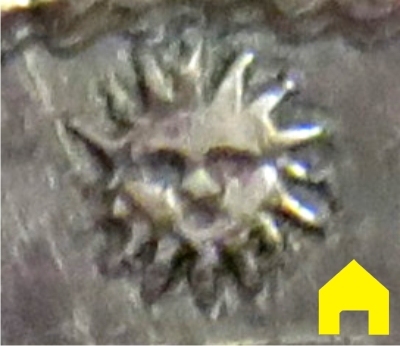
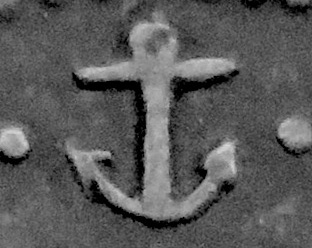
During 1657 there was a Trial of the Pix, where retained hammered coins from the mint were tested for both weight and metal purity. The milled Cromwell coinage of 1656 was not included in the trial leading many to classify the milled Cromwell coins as patterns not intended for general circulation. The mintmark sun which had been the universal mintmark of the hammered coinage was changed after the trial to an anchor mintmark which was used for the remaining years 1658 to 1660.
Peter Blondeau was to make one final series of Cromwell coins using modified dies again supplied by Thomas Simon dated 1658. These milled coins were made in significant numbers but not without production problems. The Cromwell silver crown of 1658 for example is notable for a die crack in the lower half of the coin on the obverse side only.
Oliver Cromwell died while Peter Blondeau was producing the milled coins of 1658. In the remaining three years of this period the mint reverted back to making some hammered coinage which seems to have been produced in very small quantities with poor quality and low weight before the monarchy was restored in 1660. The fact that no silver crowns were ever produced with an anchor mintmark would seem to suggest that there were enough Cromwell Crowns available to satisfy the needs for this denomination. There was only ever one set of dies for the Cromwell Crown and they seem to have been utilised to exhaustion. That does not appear to be the case for either the Cromwell halfcrown or the shilling as these pieces are not quite so common and are found in good quality. Hammered gold coins with the anchor mintmark are also very rare.
This website is an attempt to put together images of coins from this period. When completed this site should be an excellent reference tool for all coin collectors. Photographs of coins are high resolution images seen best when downloaded, saved and opened as a graphics file. Alternatively if your browser has “Image Zoom” you should consider using this feature as an option. Try now on one of the coin images to the right hand side.
The catalogue of images for coinage of this period has been sub-divided by denomination using English Silver Coinage (ESC) references for silver coinage. For gold coinage a similar format has been followed except there are of course no reference numbers.
More information sections will be completed as time allows. Recently sections on medals, coin numbers, minting techniques, and overdates have been added. Also the ESC section has been expanded to recognise varieties not listed in the 1992 edition of English Silver Coinage by Alan Rayner.
In the meantime should you possess a coin which is missing from this site please contact us so we might include pictures of your coin to make this reference guide more complete for everyone.
Enjoy and spread the word about this new reference website.
|